
The Cradle of the Cigar: Flor de Copan
Adapted from an article originally published in European Cigar Cult, No. 1, 2008.
Millennia-old traditions and the knowledge of Don Jorge Bueso’s Honduran tobacco house live on in a remarkable cigar brand: Flor de Copan.
By Katja Gnann
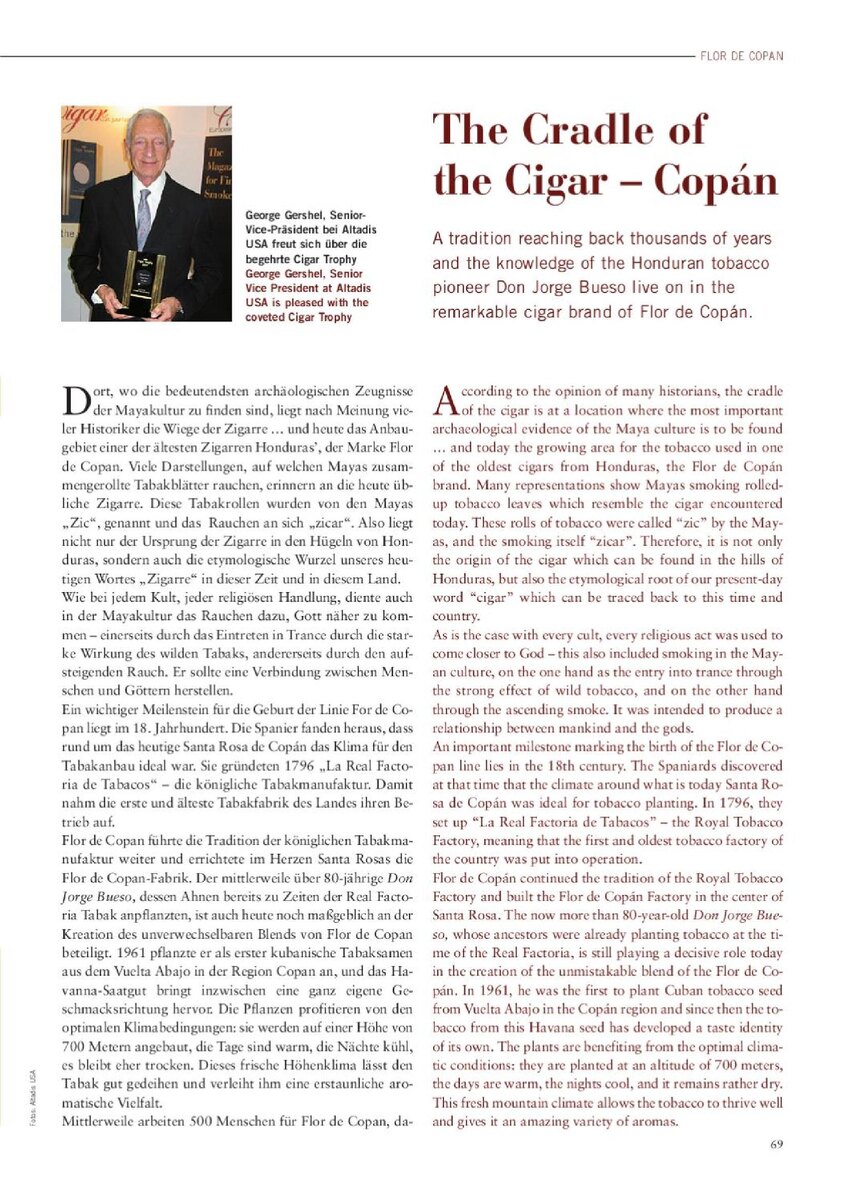
Where some of the most important archaeological evidence of Maya culture has been found, many historians also place the cradle of the cigar. Today, that same region is a tobacco-growing area for one of Honduras’s oldest cigar brands, Flor de Copan. Numerous depictions of Maya people smoking rolled tobacco leaves call to mind the modern cigar.
The Maya referred to these tobacco rolls as “Zic,” while the act of smoking was called “zicar.” So not only do the origins of the cigar lie in the hills of Honduras, but even the etymological root of our modern word “cigar” reaches back to that era and that land.
In Maya culture, smoking was also tied to ritual and spirituality. The smoke itself was believed to create a connection between human beings and the gods, while the strength of wild tobacco played a role in ceremonial trance and religious practice.
An important milestone on the road to the birth of the Flor de Copan line came in the 18th century. The Spanish discovered that the climate around what is now Santa Rosa de Copan was ideal for growing tobacco. In 1796, they established La Real Factoria de Tabacos, the royal tobacco manufactory, creating the country’s first and oldest tobacco factory.
Flor de Copan carried on the tradition of the royal tobacco manufactory and built its factory of the same name in the heart of Santa Rosa. Don Jorge Bueso, now in his eighties, whose ancestors were already growing tobacco in the days of the Real Factoria, still plays a key role in shaping the brand’s signature blend.
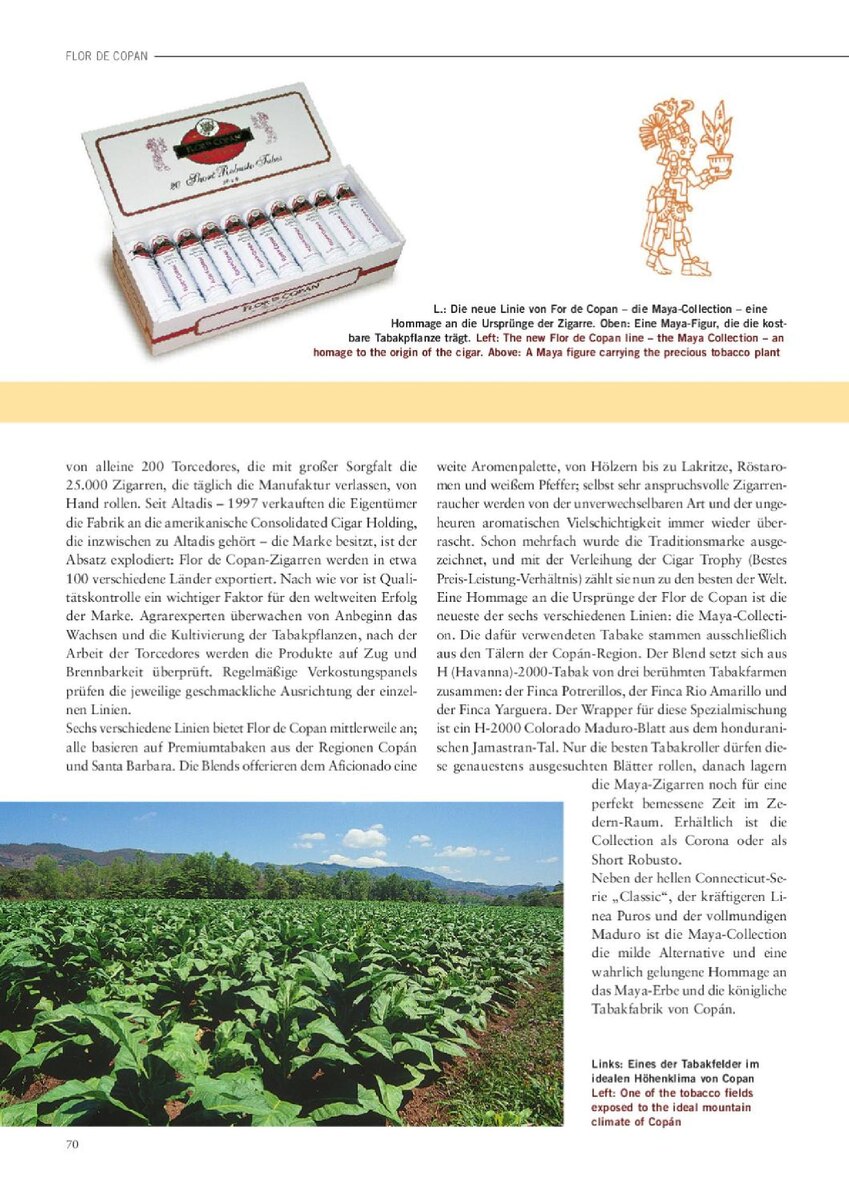
In 1961, he became the first to plant Cuban tobacco seeds from Vuelta Abajo in the Copan region, and ever since, Havana seed has given the cigars a distinctive character. The plants benefit from excellent natural conditions: they are grown at an altitude of 700 meters, with warm days, cool nights, and generally dry weather. This fresh mountain climate allows the tobacco to thrive and contributes to its remarkable aromatic complexity.
Bottom line
Flor de Copan stands as a living expression of Honduran cigar heritage, linking modern craftsmanship with traditions that reach back to the Maya world and the tobacco legacy of Santa Rosa de Copan. For cigar enthusiasts, it remains a compelling example of how place, history, and blending expertise come together in a distinctive premium smoke.
Editorial note: This version has been adapted and localized for a U.S. audience. All non-relevant external links and market-specific references have been removed.