
The Revival of Tobacco
By Steven A. Ross
Mac Baren launches 7 Seas—American-style aromatics—and revives traditional English-style blends
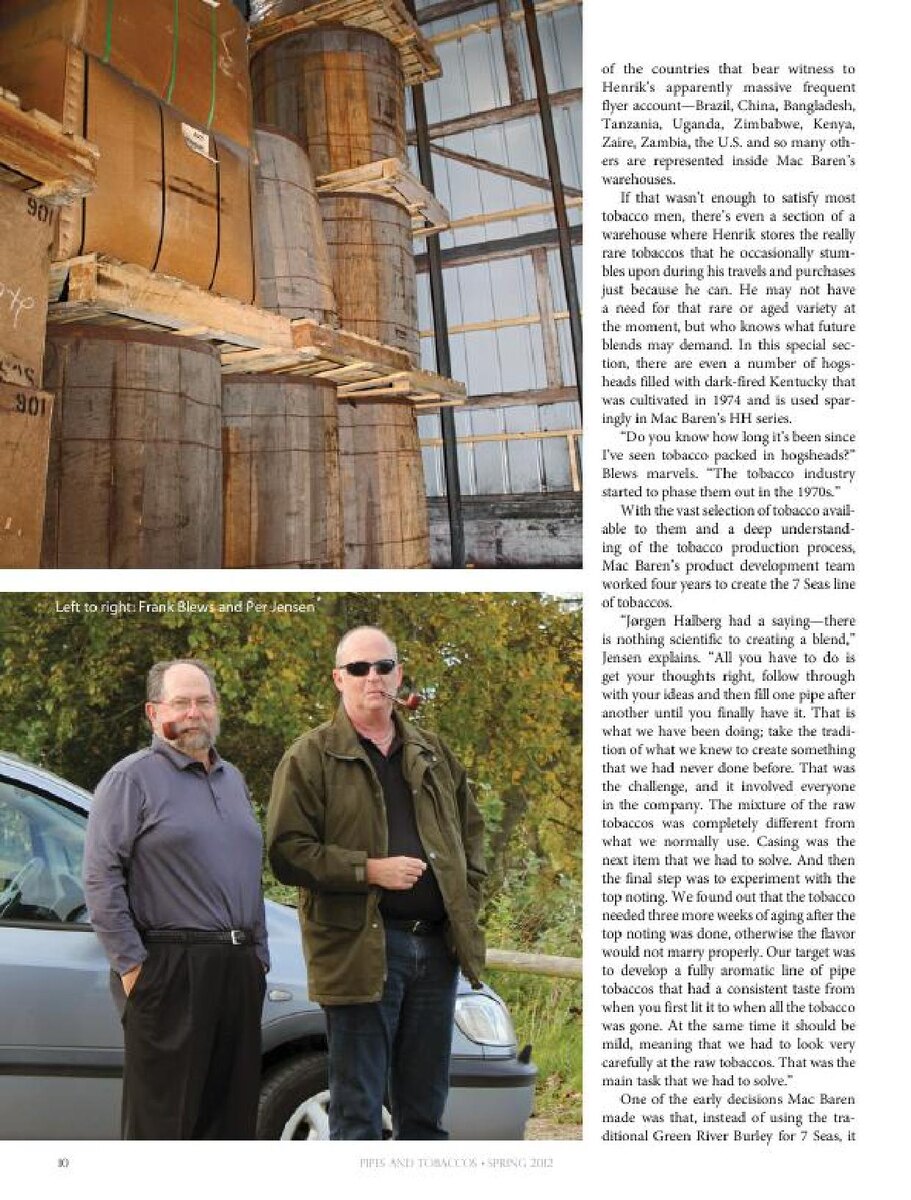
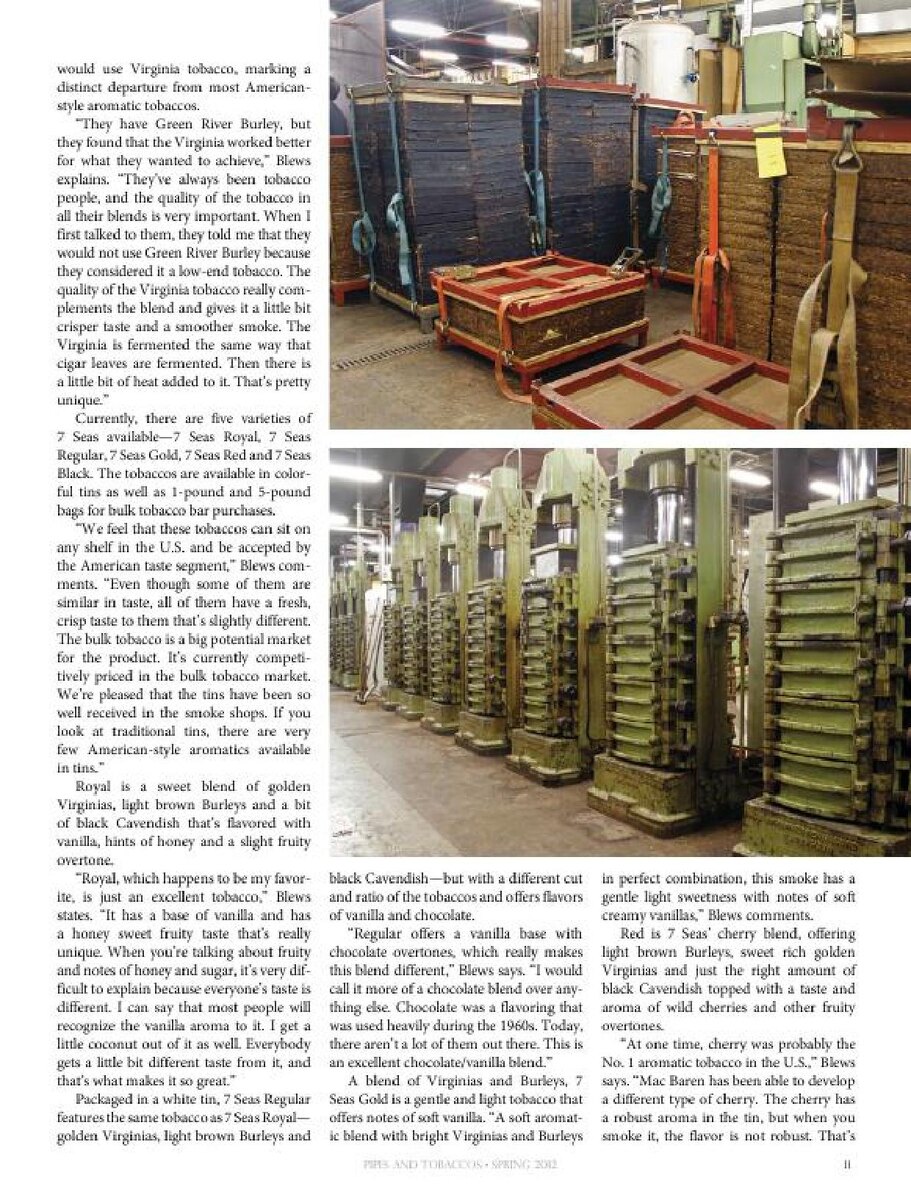
The global pipe‑tobacco category may feel quiet, but not at Mac Baren. The Danish family‑owned maker is leaning into growth with knowledgeable blenders, a fresh line of American‑style aromatics called 7 Seas, and a major investment in vintage steam presses to bring classic English‑style mixtures back to life.
Driving both the factory expansion and broader product range is Henrik Halberg, a fourth‑generation member of the family at the helm. Launching 7 Seas while buying up old English steam presses might look contrarian in today’s climate, but for Henrik it’s simply continuing a tradition of craftsmanship and category stewardship.
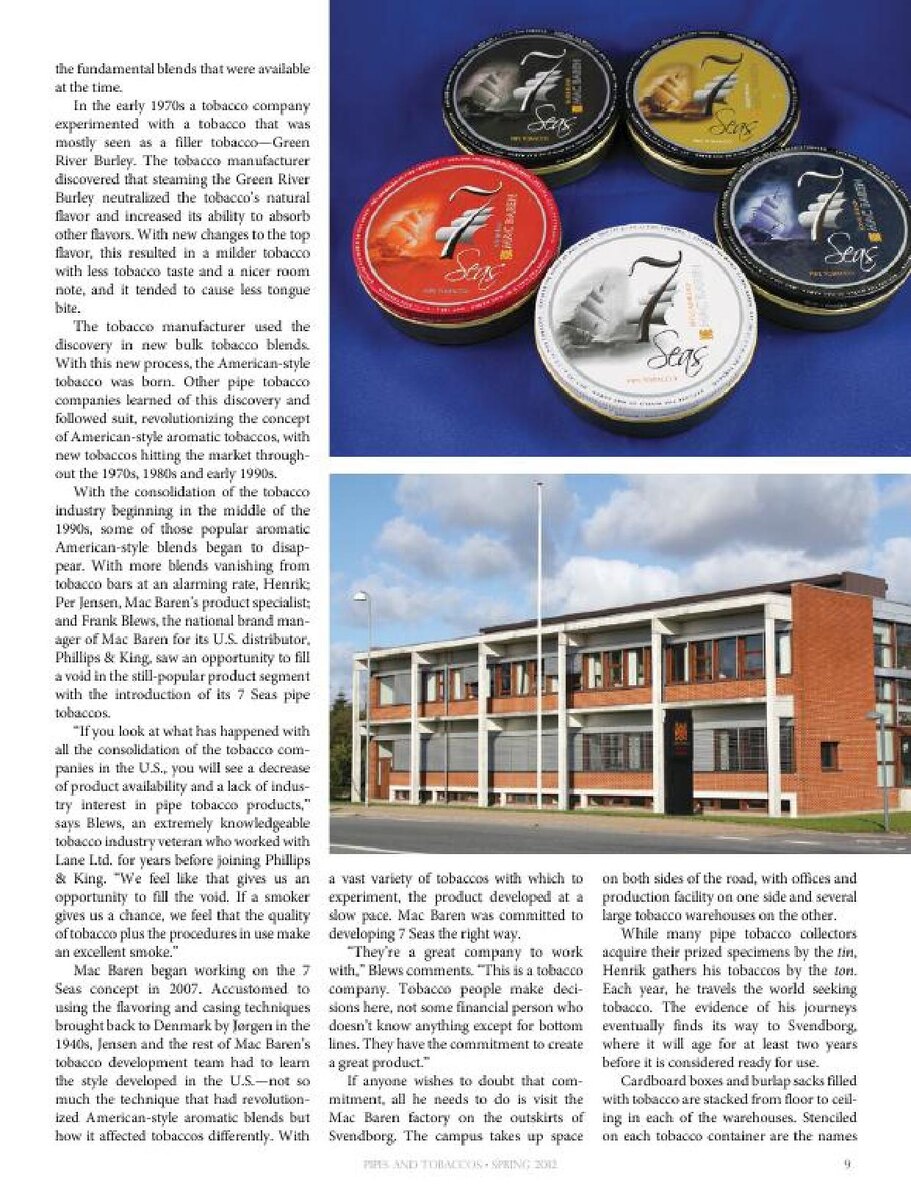
Like many families from the port city of Svendborg, the Halbergs once earned their living from the sea. A young Harald Halberg chose a different path. Leveraging the connections of his father—a ship’s captain who specialized in transporting tobacco—Harald purchased the S. Bonnelycke tobacco company in 1887 and renamed it Harald Halberg Tobaks and Cigarfabrik, continuing a legacy that dated to 1826.
It was Harald’s grandson, Jørgen, who ultimately took the company international in pipe tobacco. At the start of World War II, Jørgen found himself in the United States, where he worked in several pipe‑tobacco factories and learned the American approach to aromatics—using casings and top flavors for blends like VIP, Rum and Maple, Four Seasons, and Mixture 79, all popular in the 1940s. These were robust, Burley‑forward blends, a style then unfamiliar in Denmark. After the war, Jørgen returned home and applied those methods to Danish tastes, creating aromatics including Mac Baren Golden Blend in 1950 and Mac Baren Mixture in 1958. Sales surged, and the company became so closely tied to the Mac Baren name that Henrik officially adopted it for the firm in 1995.
While Jørgen was drawing on techniques from the 1940s, American manufacturers kept searching for new ways to flavor tobaccos—especially after the U.S. Surgeon General’s 1964 report on smoking and health coincided with a boom in pipe popularity. Makers increasingly used food‑grade flavorings, though this didn’t fundamentally change the blends on offer at the time.
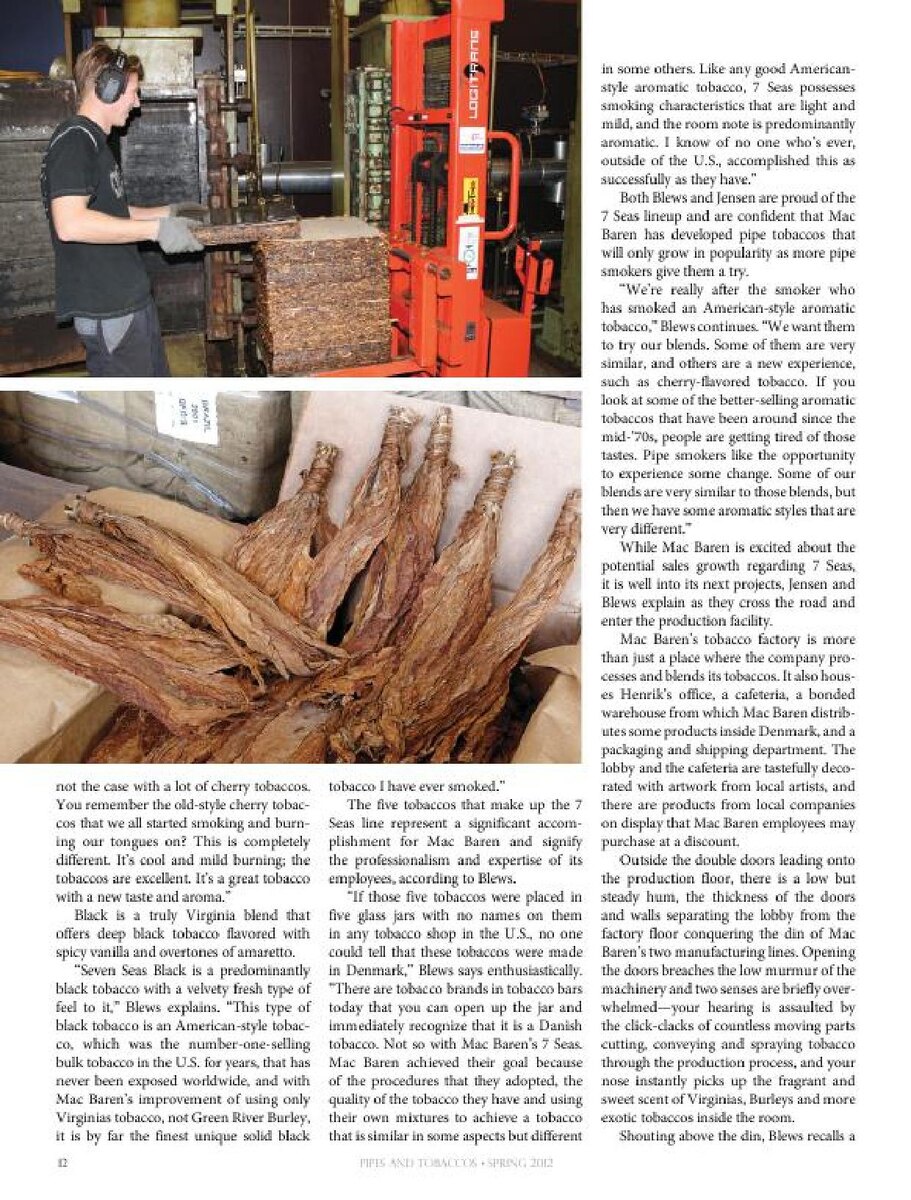
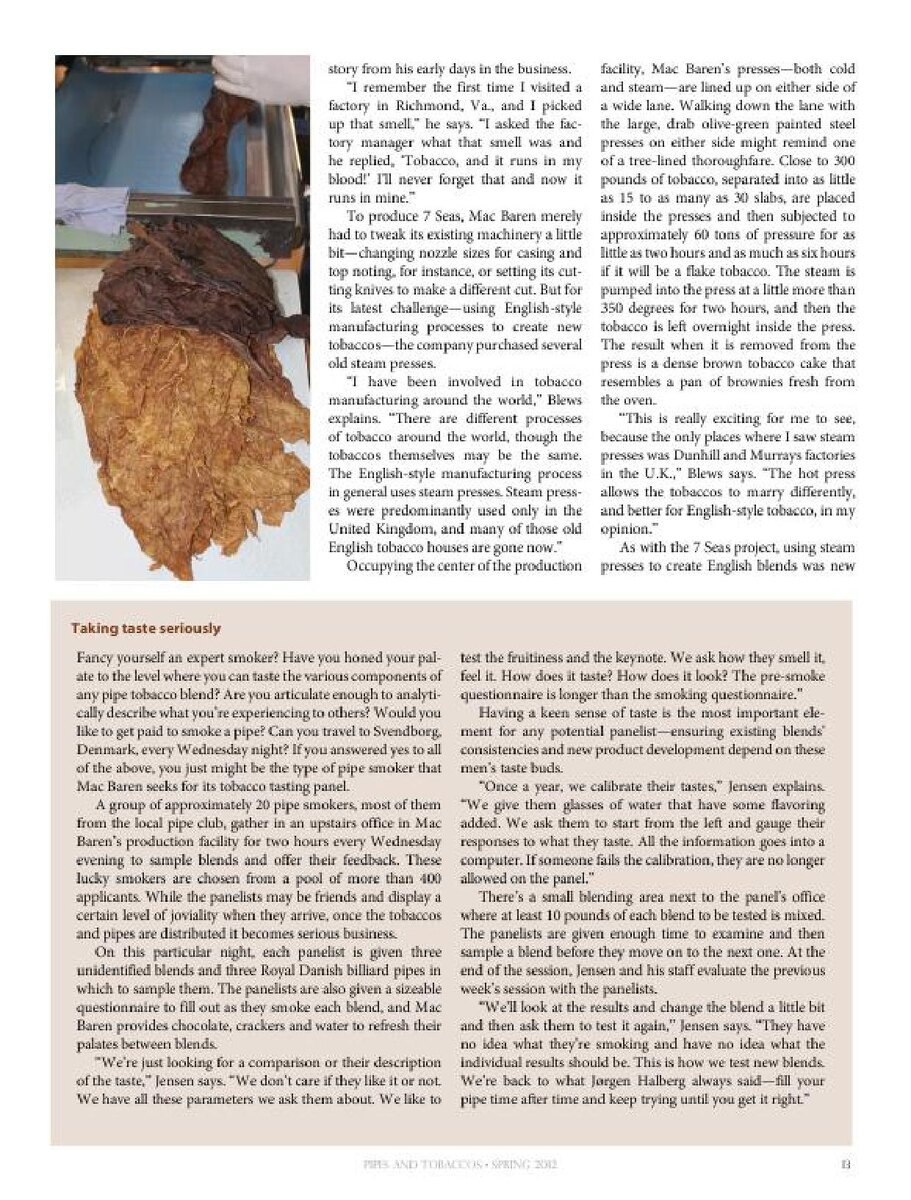
In the early 1970s, one company experimented with a leaf mostly viewed as filler: Green River Burley. By steaming the leaf, they neutralized much of its natural taste and dramatically increased its capacity to absorb other flavors. Paired with newer flavor components, the result was a milder tobacco with a softer tobacco taste, a room note more pleasant to bystanders, and a lower likelihood of tongue bite.
That discovery fueled a new wave of blends sold in bulk, and with it the modern American‑style aromatic was born. Other manufacturers quickly took notice and followed suit, reshaping the category as fresh blends rolled out through the 1970s, 1980s, and early 1990s.
Bottom line
Mac Baren’s 7 Seas line and its investment in classic steam‑press equipment underscore a simple truth: American‑style aromatics and traditional English‑style blends both have loyal followings. By honoring heritage while innovating for modern tastes, Mac Baren keeps the pipe‑tobacco category vibrant for today’s U.S. shopper.
Disclaimer: This article is for informational and historical reference only. Tobacco products are intended for adults of legal age. Please follow all applicable laws and regulations in your jurisdiction.