
Why You Could Smoke on Airplanes Back Then—and Why It’s Strictly Banned Today
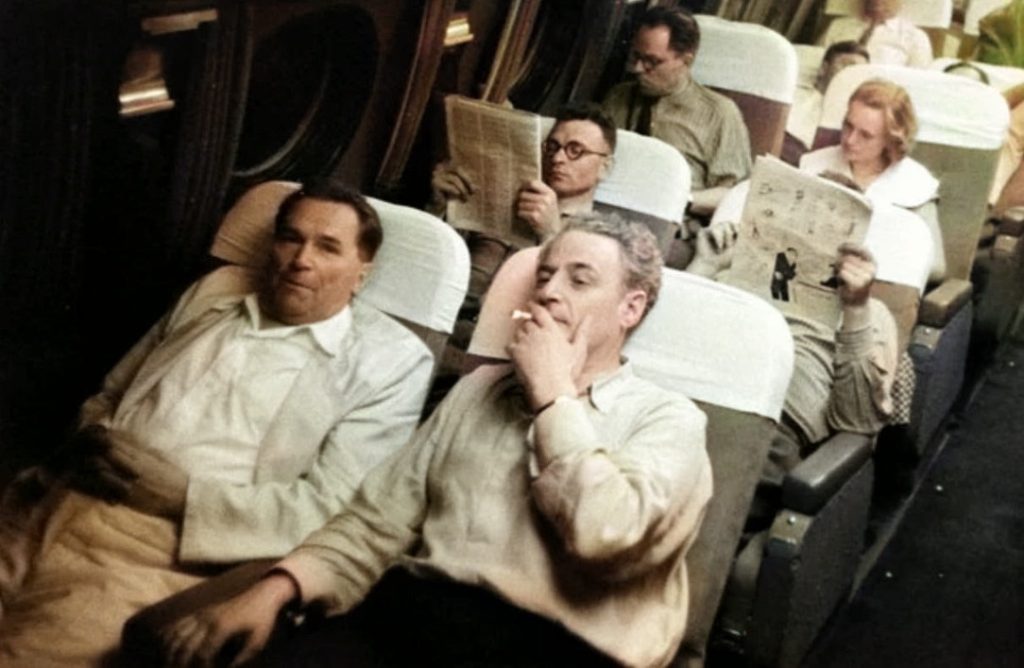
Light a cigarette on a U.S. flight today and you won’t just get side‑eye—you’ll be in violation of federal law, facing penalties and possibly an unscheduled landing. But a few decades ago, smoking at 35,000 feet was routine. Ashtrays were built into armrests, and the cabin haze was as much a part of flying as a complimentary coffee.
A haze above the clouds: what flying used to look like
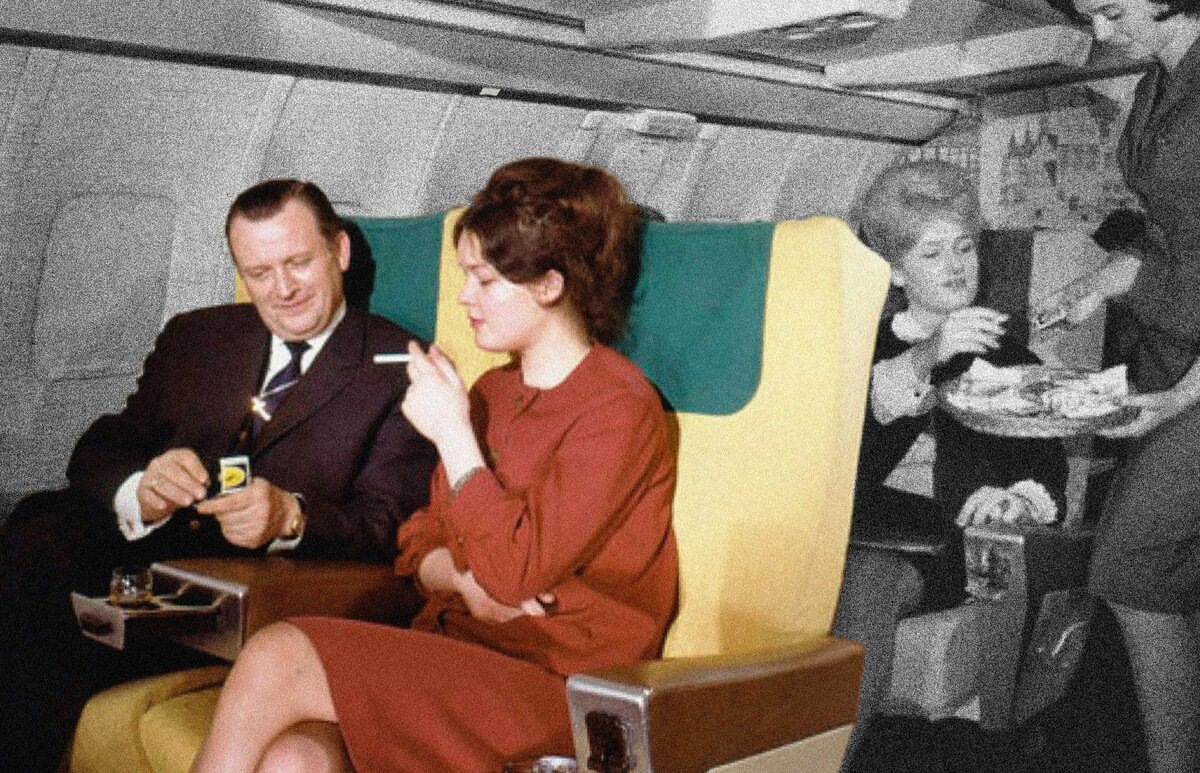
Picture a late‑1970s hop from New York to Miami on a Boeing narrow‑body. Soft, wide seats; glossy in‑flight magazines; flight attendants pouring coffee from steel pots. Once the seatbelt sign clicked off, the “No Smoking” lights often followed—and a constellation of lighters flicked on. Passengers sparked up Marlboro, Camel, Winston, Lucky Strike, or Newport. Airlines offered “smoking” and “non‑smoking” sections, but air doesn’t respect row numbers; by mid‑flight, the smell drifted everywhere.
Why it was possible back then
- Different social norms: In the 1960s and 70s, roughly 35–40% of U.S. adults smoked. Lighting up at work, in restaurants, and on planes was widely accepted.
- “Sections” as a compromise: Regulators once required non‑smoking rows, but cabins were single, shared airspaces. The policy looked good on paper, less so in practice.
- Ventilation tradeoffs: Classic jets cycled large volumes of fresh bleed air every few minutes. Even so, smoke migrated; no curtain could stop it completely. Modern jets typically mix outside air with HEPA‑filtered recirculated air to improve efficiency while still refreshing the cabin multiple times per hour.
How the U.S. smoking ban on planes arrived
America didn’t flip a single switch—it phased smoking out flight by flight:
- 1973: The Civil Aeronautics Board required non‑smoking sections on most flights.
- 1988: Congress banned smoking on U.S. domestic flights of 2 hours or less.
- 1990: The ban expanded to domestic flights of 6 hours or less (covering almost all U.S. segments).
- Mid‑1990s: Most U.S. carriers voluntarily eliminated smoking on remaining long‑haul segments.
- 2000 and beyond: Federal rules and 49 U.S.C. § 41706 effectively prohibited smoking on virtually all commercial flights to, from, or within the United States. Tampering with a lavatory smoke detector is a federal offense.
Was fire risk a myth? Not at all
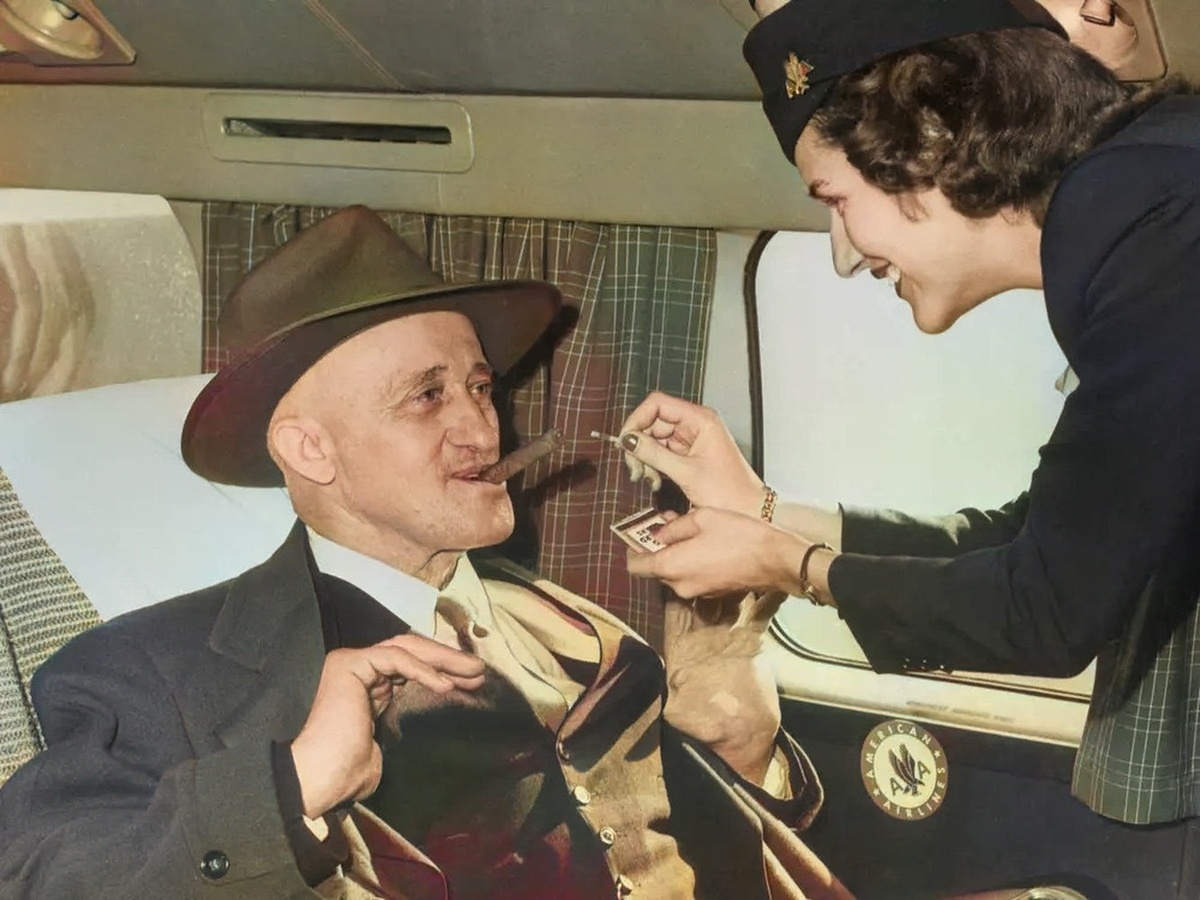
While most in‑flight cigarettes didn’t cause emergencies, the risk was real—and sometimes tragic. Lavatory trash‑bin fires linked to discarded cigarettes contributed to high‑profile incidents in the 1970s and 80s. After Air Canada Flight 797’s deadly lavatory fire in 1983, the FAA mandated smoke detectors in lavatories and automatic fire extinguishers in lav trash receptacles. Even today, you’ll notice a small ashtray on or near many lavatory doors—required by regulation—so if someone breaks the rules, a lit butt can be stowed safely until the crew responds.
Economics versus smoke: why airlines embraced the ban
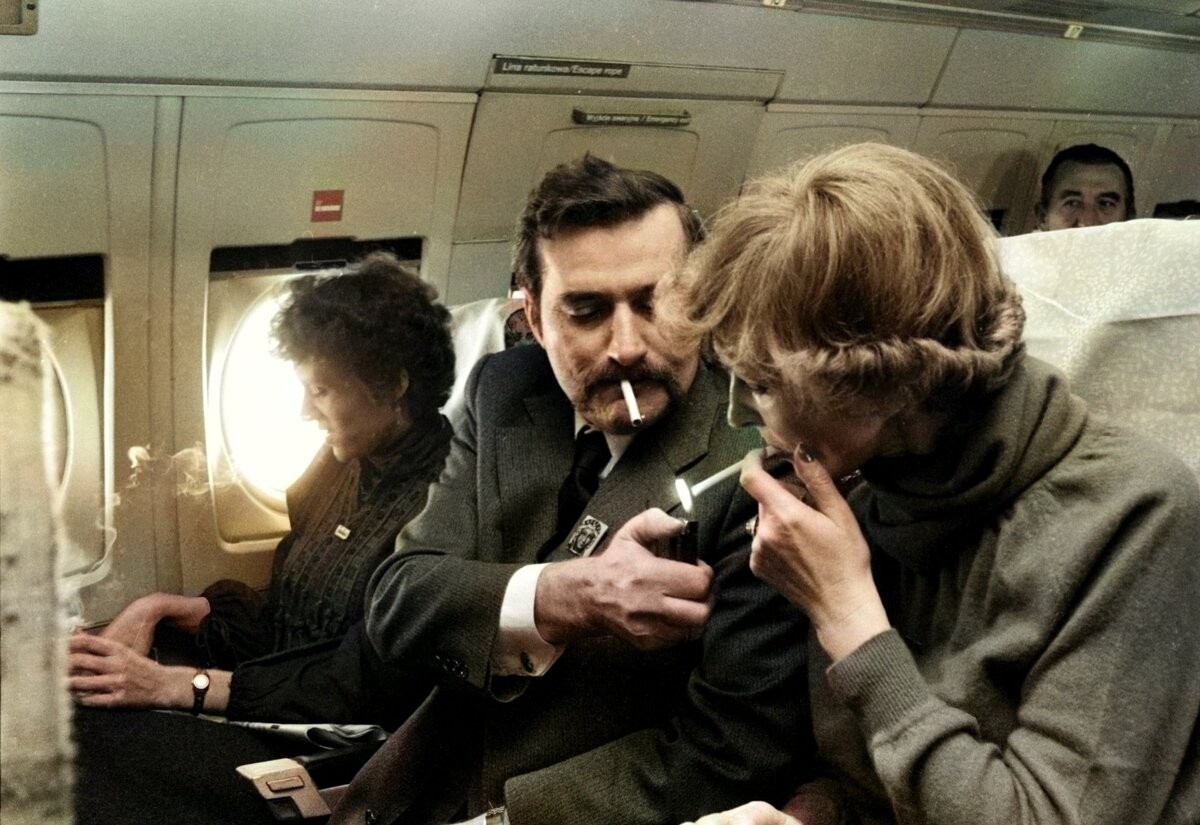
- Cleaner cabins, lower costs: No smoke means less deep cleaning, fewer stained panels and fabrics, and longer filter life.
- Operational efficiency: Reducing smoke load simplifies air‑system management and can trim fuel and maintenance costs across a fleet.
- Crew and passenger health: Concerns over secondhand smoke grew through the 80s and 90s, with crews pushing for safer workplaces.
What it was like for crews
Flight attendants once juggled coffee pots and cigarette trays, and many smoked themselves—sometimes in the galley on long hauls. If you fly on a retrofitted older airframe today, you might still spot an ashtray sealed into an armrest: a little time capsule from a smokier era.
Could airlines build a smoking lounge on board?
In theory, a sealed, independently ventilated compartment could contain smoke. In reality, it’s a non‑starter: it would sacrifice seats, add weight and complexity, complicate certification, and conflict with federal law. The modern sky is smoke‑free, full stop.
The bottom line
For many travelers, the scent of tobacco once meant you were airborne. Today, the rules are clear and enforced: no smoking, anywhere on board. Whether you remember the haze fondly or prefer the crisp cabin air of 2025, the shift reflects changes in culture, crew safety, and the economics of running an airline.
Popular U.S. cigarette brands from the “smoking section” era
Nostalgia has its own flavor profile. The brands most often spotted above the clouds back in the day included Marlboro, Camel, Winston, Lucky Strike, and Newport—names that helped define American tobacco culture long before cabins went smoke‑free.